
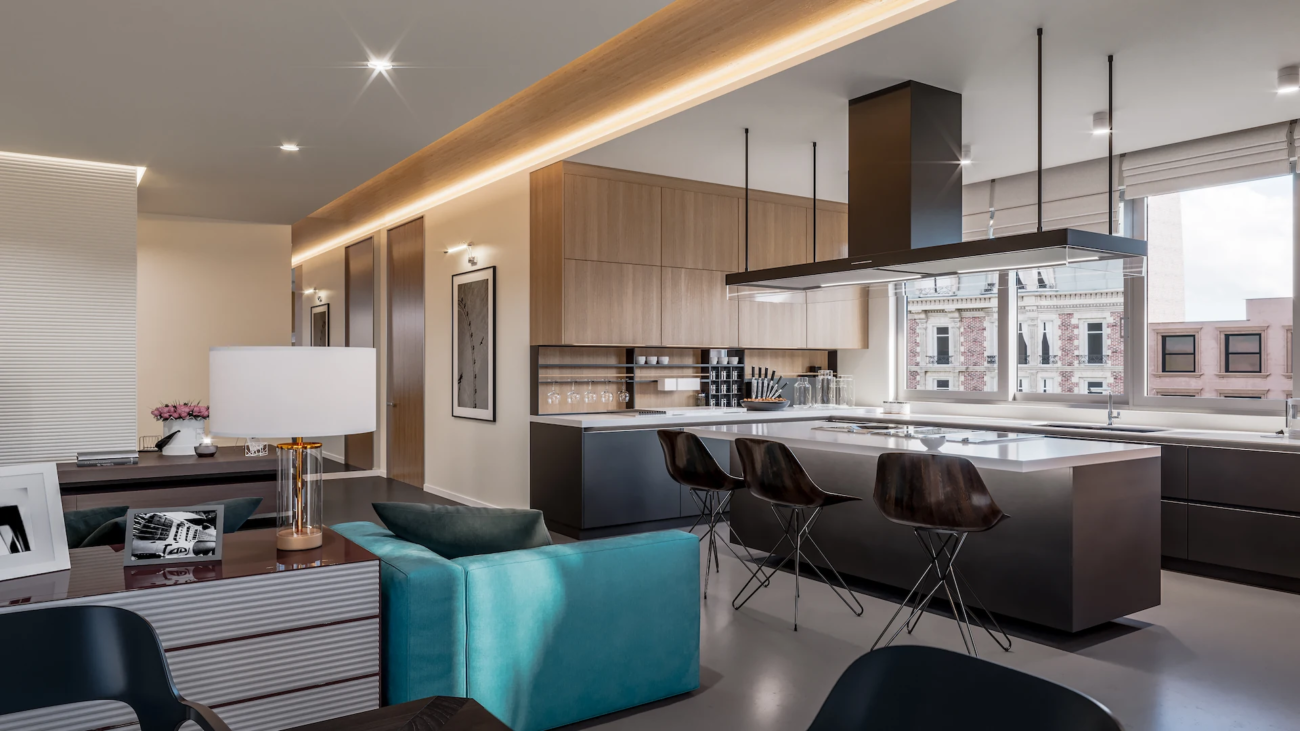
Decorating a kitchen and living room together involves decisions that impact daily living, space perception, and long-term comfort. The union of these two spaces reflects a modern way of living, where natural light, visual spaciousness, and harmony take center stage. For a balanced result, it’s crucial to plan the layout carefully, choose durable materials, and define each zone without the need for walls.
Advantages of an Integrated Kitchen and Living Room
The sense of spaciousness is one of the most obvious benefits of joining the kitchen and living room. By removing walls, light flows better, and the space appears larger—especially valuable in urban homes with limited square footage.
Improved natural lighting allows for less reliance on artificial light during the day.
When the kitchen shares orientation with the living room, both spaces benefit from existing windows, creating more pleasant and energy-efficient environments.
Functionality in daily life also improves. Cooking while maintaining visual contact with the rest of the home facilitates interaction, whether caring for children or entertaining guests.
The increase in property value is another important point. Open kitchens are highly sought after in the current real estate market, which can make a property more attractive for rental or sale.
How to Properly Layout an Open Kitchen and Living Room
Good layout is the foundation for decorating a kitchen and living room without compromising comfort.
Space planning should begin with circulation. It’s important to ensure comfortable paths between areas, avoiding constant crossings between those cooking and those relaxing.
The kitchen work triangle, formed by cooking, washing, and storage areas, remains essential even in open spaces. Maintaining balanced distances avoids unnecessary movements and concentrates culinary activities in a specific area.
Common layouts for kitchen and living room are:
L-shaped, which frees up the center and facilitates integration.
With an island, ideal for larger spaces, acting as a transition element.
Linear, suitable for smaller homes, especially if a visually discrete kitchen is chosen.
The dining area should be placed so that chairs can be pulled out without interfering with the kitchen or the sofa. Respecting these distances enhances daily use of the space.
Key Furniture and Elements for a Balanced Space
Furniture serves a dual function—practical and visual.
Integrated kitchen furniture helps create a harmonious overall look. Panelled appliances and smooth fronts reduce the visual impact of the kitchen on the living room.
The island or peninsula can serve as a work surface, informal bar, or divider. Its height and materials directly influence the perception of order from the living area.
The sofa as a visual delimiter is an effective solution. Placing it with its back to the kitchen clearly defines the boundary without compromising the continuity of the space.
Open shelving allows separation of areas without blocking light. It also provides extra storage and reinforces the decorative style.
Aesthetic coherence is essential. Choosing finishes that complement both the kitchen and living room prevents the space from feeling fragmented. In this regard, industrial style works especially well because it integrates metal, wood, and neutral tones into a cohesive environment.
Ideal Lighting to Differentiate the Kitchen and Living Room
Lighting is one of the most effective tools for successfully decorating a kitchen and living room.
General lighting should provide an even base to move comfortably through the space. Recessed spotlights or discreet ceiling fixtures are a good option.
Task lighting in the kitchen is essential. LED strips under upper cabinets or directed spotlights over the countertop improve safety and precision while cooking.
Decorative lighting in the living room adds warmth and defines the relaxation area. Floor lamps, wall sconces, or indirect lighting help differentiate this zone without structural changes.
Lighting scenes allow the space to adapt to different times of the day. Having independent circuits makes it easy to transition from a functional to a more relaxed atmosphere with a single action.
Decorating a kitchen and living room requires a comprehensive view of the space, where layout, furniture, and lighting work together. Focusing on careful planning, durable materials, and a coherent aesthetic enables you to enjoy a practical, comfortable, and attractive environment. When each decision addresses both daily use and visual perception, the kitchen and living room cease to be separate spaces and become the true heart of the home.
Book Now on BizTrip