
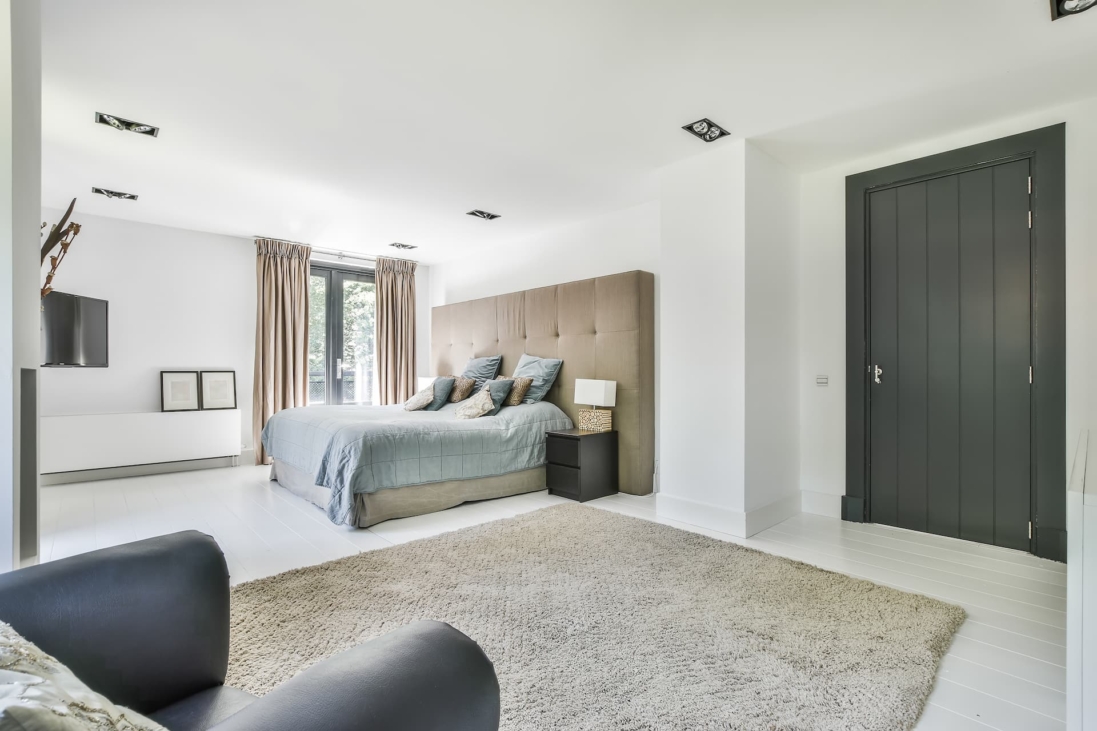
The master bedroom is no longer just a place to sleep. Decorating a master bedroom today means designing a space focused on rest, well-being, and emotional balance.
In 2026, interior design trends emphasize natural materials, functional layouts, and solutions that improve sleep quality. The key is not to accumulate decorative elements, but to choose each piece intentionally.
Below, we explain how to achieve a stylish, practical master bedroom adapted to modern needs.
Choosing Furniture for a Master Bedroom
The choice of furniture determines both aesthetics and daily comfort. The bed is the central element and must be proportionate to the size of the room. To ensure comfortable circulation, it is recommended to maintain between 60 and 75 centimeters (24–30 inches) of free space around the bed.
In bedrooms larger than 12 m² (130 sq ft), a 150 cm or 180 cm bed (queen or king size) can fit comfortably. In smaller spaces, it is advisable to consider solutions with integrated storage, such as ottoman beds or under-bed drawers.
The wardrobe is the second key feature. Built-in wardrobes optimize space and reduce visual impact, especially when designed up to the ceiling. Sliding doors save usable floor area and facilitate movement in narrow rooms.
Nightstands should be positioned at a height similar to the top of the mattress, generally between 50 and 70 cm (20–28 inches). This alignment improves ergonomics and daily functionality.
Regarding materials, it is recommended to opt for FSC or PEFC-certified wood, which guarantees responsible forest management. Additionally, furniture should comply with European technical regulations, such as UNE standards for strength and stability in domestic furniture certified by AENOR.
Choosing sustainable and safe furniture is an investment in durability and household health.
How to Decorate the Walls
Walls directly influence the perception of space and sleep quality. Color and materials define the emotional atmosphere of the bedroom.
In 2026, warm neutral tones such as greige, sand, or off-white will dominate. These colors visually enlarge the space and provide serenity. Soft greens and muted blues help reduce stress and promote rest.
From a technical perspective, it is essential to use low-VOC (volatile organic compound) paints. Certifications such as the EU Ecolabel or A+ rating ensure better indoor air quality.
Mineral coatings, lime-based paints, or natural clay finishes add texture and improve wall breathability. A healthy bedroom begins with materials that do not release harmful substances.
Biophilic design is also gaining prominence. Introducing natural textures, botanical wallpaper, or finishes that mimic wood and stone reinforces the sense of connection with nature.
Headboard Wall Design for a Master Bedroom
The headboard wall is the focal point of the bedroom. Its design defines the aesthetic personality of the space.
A current trend is a wall-to-wall upholstered headboard in linen or cotton, which visually unifies the room. Slatted wood panels also work well, adding warmth and improving acoustics.
Proportion is key. The headboard should be at least the width of the bed or slightly extend beyond it to balance the composition.
Integrated lighting elevates the final result. Wall sconces or indirect LED strips replace table lamps and free up space on nightstands. These installations must comply with Low Voltage Electrical Regulations to ensure safety.
The combination of texture, proportion, and lighting turns the headboard wall into the visual axis of the bedroom.
Ideas for Decorating a Small Master Bedroom
When space is limited, every decision matters. The priority in a small bedroom is to maximize light and reduce visual clutter.
Light colors reflect natural light more effectively and enhance spatial perception. Off-white, pearl gray, or soft beige are safe choices.
Wall-mounted furniture adds visual lightness. Floating nightstands or shelves free up floor space and make cleaning easier.
Beds with integrated storage eliminate the need for additional dressers. Sliding wardrobe doors can save up to one meter of opening space.
The strategic use of mirrors doubles natural light and creates depth. Placing a mirror opposite a window enhances brightness.
Applying minimalist design principles is especially effective in small bedrooms. Reducing decorative elements and keeping surfaces clear creates a sense of order that visually expands the space.
Recessed ceiling or wall lighting avoids bulky lamps and improves the perception of spaciousness.
How to Decorate a Modern Master Bedroom
A modern bedroom combines technology, sustainability, and functional design. Contemporary modernity favors warm minimalism and discreetly integrated technology.
Beds may incorporate LED lighting, hidden USB ports, or invisible storage systems. Home automation allows lighting intensity or temperature to be adjusted to align with circadian rhythms.
Dimmable lighting improves sleep quality and reduces energy consumption, especially when using efficient systems recommended by institutions such as IDAE.
Natural materials remain central. Wood with visible grain, organic textiles, and emission-free paints enhance the sense of well-being.
The modern bedroom may also integrate multifunctional areas, such as a reading corner or a small vanity. Open layouts and chromatic coherence prevent visual fragmentation.
A modern master bedroom is not cold or impersonal, but balanced, functional, and healthy.
Decorating a master bedroom with style means finding the balance between aesthetics, functionality, and well-being. From furniture selection to wall treatments, every decision influences sleep quality and household harmony.
A well-designed bedroom does not only look good — it feels good.